
Pet Urine on Carpet: What Actually Removes the Smell?
Masking fragrance is not odour removal. Successful treatment depends on finding how far the urine travelled and treating the affected layers.
If the smell returns on a humid afternoon, it was masked rather than removed. Urine can pass through the pile and settle in the backing, underlay or subfloor.
Pet urine can move through the carpet pile into the backing, underlay and sometimes the floor below. That is why a quick spray may improve the smell for a few hours while the odour returns in humid weather.
Why fragrance is not a fix
Fresh accidents should be blotted promptly with clean absorbent towels. Avoid aggressive scrubbing, which spreads contamination and distorts fibres. Do not combine household chemicals: mixtures can damage carpet, set stains or create unsafe fumes.
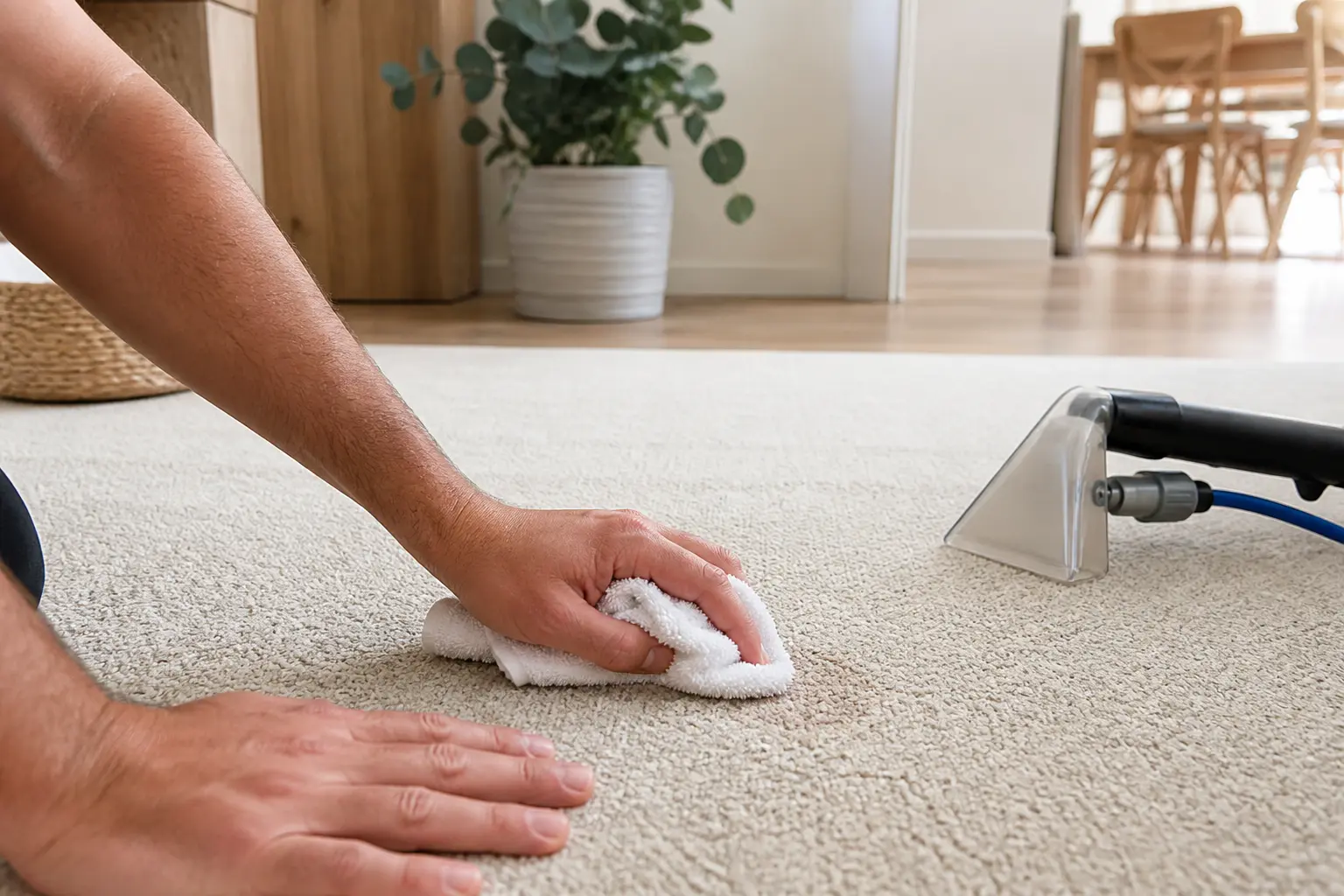
Professional treatment usually begins by locating the affected area and assessing its depth. Enzyme or oxidising products may be selected depending on the fibre, dye stability and contamination. The treatment needs sufficient contact time, followed by controlled extraction.
What we look for on the job
A minor surface accident is very different from repeated contamination that has reached the underlay. In severe cases, lifting the carpet, replacing underlay or treating the subfloor may be necessary. Standard cleaning alone cannot reliably solve a problem in layers it does not reach.
For an accurate quote, photograph visible marks and explain the pet type, approximate number of incidents, age of the problem and previous products used. Honest detail helps the technician recommend the right level of treatment.
Why urine odour can be difficult to remove
A fresh accident may affect only the upper carpet fibres. Repeated accidents can pass through the backing into the underlay and floor. Urine salts remain after the visible moisture has dried, and humidity can make the odour noticeable again. This is why a room may smell acceptable on a cool morning and much worse later in warm, humid weather.
Fragrance changes what you smell temporarily; it does not remove the source. Effective treatment depends on locating the full affected area and reaching every contaminated layer that can reasonably be treated.
How the affected area is assessed
Visible marks do not always show the full extent of contamination. A technician may use inspection, odour, moisture information and detection equipment to map likely areas. They also need to know the number and size of pets, how long the problem has been present and whether the same location has been used repeatedly.
The carpet fibre and dye stability matter too. A product suitable for a colourfast synthetic carpet may be inappropriate for wool or an unstable dye. Pre-testing helps reduce the risk of colour loss, bleaching or texture change.
Treatment levels and realistic results
A recent surface accident may respond to targeted treatment and extraction. More established contamination often needs a product with adequate contact time before extraction. Depending on the material and condition, a technician may choose an enzyme-based or oxidising treatment. The product must be compatible with the carpet and used at the correct strength.
When urine has saturated the underlay, cleaning the pile alone cannot reliably remove the source. The carpet may need to be lifted so contaminated underlay can be replaced and the subfloor assessed. In severe cases, the floor itself needs cleaning and sealing. This costs more, but repeatedly paying for surface deodorising will not solve contamination below it.
What homeowners should and should not do
Blot a fresh accident with absorbent white towels. Apply firm pressure rather than rubbing. Keep pets and children away from the area while it dries, and record the location if it becomes difficult to see later.
Do not mix vinegar, bleach, ammonia, disinfectant or other household products. Mixtures can create fumes, damage fibres, set discolouration or interfere with later treatment. Avoid heavily perfumed sprays when arranging an assessment because they can make it harder to identify the original odour.
For quoting, send a wide photo of the room, close photos of visible marks and an honest estimate of how many incidents occurred. Accurate information lets the cleaner recommend a surface treatment or warn that deeper work may be necessary.