
Mattress Cleaning for Dust Mites and Allergies
Mattress cleaning can reduce accumulated dust, skin debris and allergens, but it should be part of a broader bedroom routine.
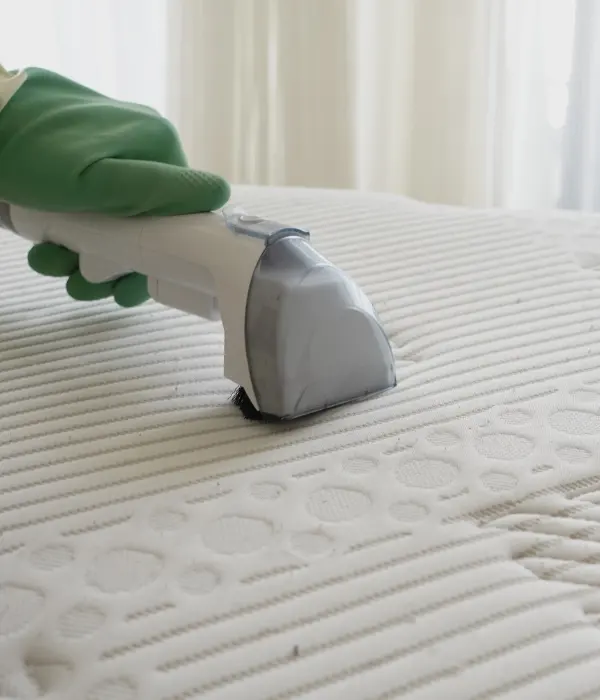
A mattress clean can remove a meaningful load of dust, skin debris and allergens. Cleaning can reduce these materials, but it does not remove every allergen or replace medical advice.
Mattresses collect shed skin, body oils, dust and other fine material over years of use. For people sensitive to dust-mite allergens, cleaning can reduce part of that accumulated load—but it is not a medical treatment or a permanent allergy cure.
What cleaning can—and cannot—do
Professional mattress cleaning should use controlled moisture and thorough extraction. The technician needs to know about stains, odours, mattress construction and whether one or both sides are used. Biological stains may require targeted treatment and cannot always be made invisible.
What cleaning addresses is the material gathered at and just below the surface. What it cannot do is reach every layer of a thick mattress, or stop dust and skin debris returning once the bed is back in nightly use. That is why cleaning belongs inside a routine rather than standing on its own.
Understanding the allergen problem
Dust mites feed on shed skin and favour warm, humid environments. The mites themselves and particles associated with them can contribute to symptoms in sensitive people. Mattresses are only one potential reservoir; pillows, bedding, carpet, soft furnishings and settled bedroom dust also matter.
This is why a single mattress clean cannot permanently remove an allergy trigger from a room. It can reduce accumulated material in the mattress surface as part of a wider routine.
How often a mattress needs cleaning
For most households, professional cleaning every six to twelve months is a reasonable benchmark. That is often enough to manage build-up that changing the bedding cannot reach, while staying practical for everyday life.
Not every bed sits in the same category. A guest-room mattress may go considerably longer between cleans. The main bed in a busy household, a child's mattress, or a room where someone has allergy symptoms will usually justify a shorter interval. Use rather than the calendar should set the timing.
Homes with children
Children change the pattern. Mattresses in family homes are used for far more than sleeping: story time, snacks, morning cuddles, night sweating, sick days and the occasional toilet-training setback. Even with diligent use of sheets and protectors, a child's mattress often sees heavier use than parents expect.
There is a practical reason not to wait. Recent spills and fresh odours are generally easier to treat than long-set contamination, which can become permanent. Acting early is usually less work than restoring later.

Humidity, ventilation and the local climate
Warm, humid conditions make mattresses work harder. Moisture lingers longer in bedrooms with limited airflow, and fabrics hold everyday dust and odours more readily. On the Gold Coast this is worth factoring in, particularly through humid stretches of the year.
That does not mean every mattress needs constant attention. It does mean generic online schedules are less useful than looking at your own room: how well it ventilates, how heavily the bed is used, and whether anyone in the house is reacting to dust.
Signs it is time to book
Sometimes the interval is enough to go on. Often the mattress gives clearer signals:
- a stale, musty or sweaty smell that does not improve after airing the room;
- visible marks from sweat, spills, body oils, pets or children's accidents;
- someone waking with more congestion, sneezing or irritation than usual;
- no professional clean in over a year;
- the room feels clean, but the bed itself does not.
If several of those apply, get advice based on the mattress type and its condition rather than guessing at the method.
What professional mattress cleaning involves
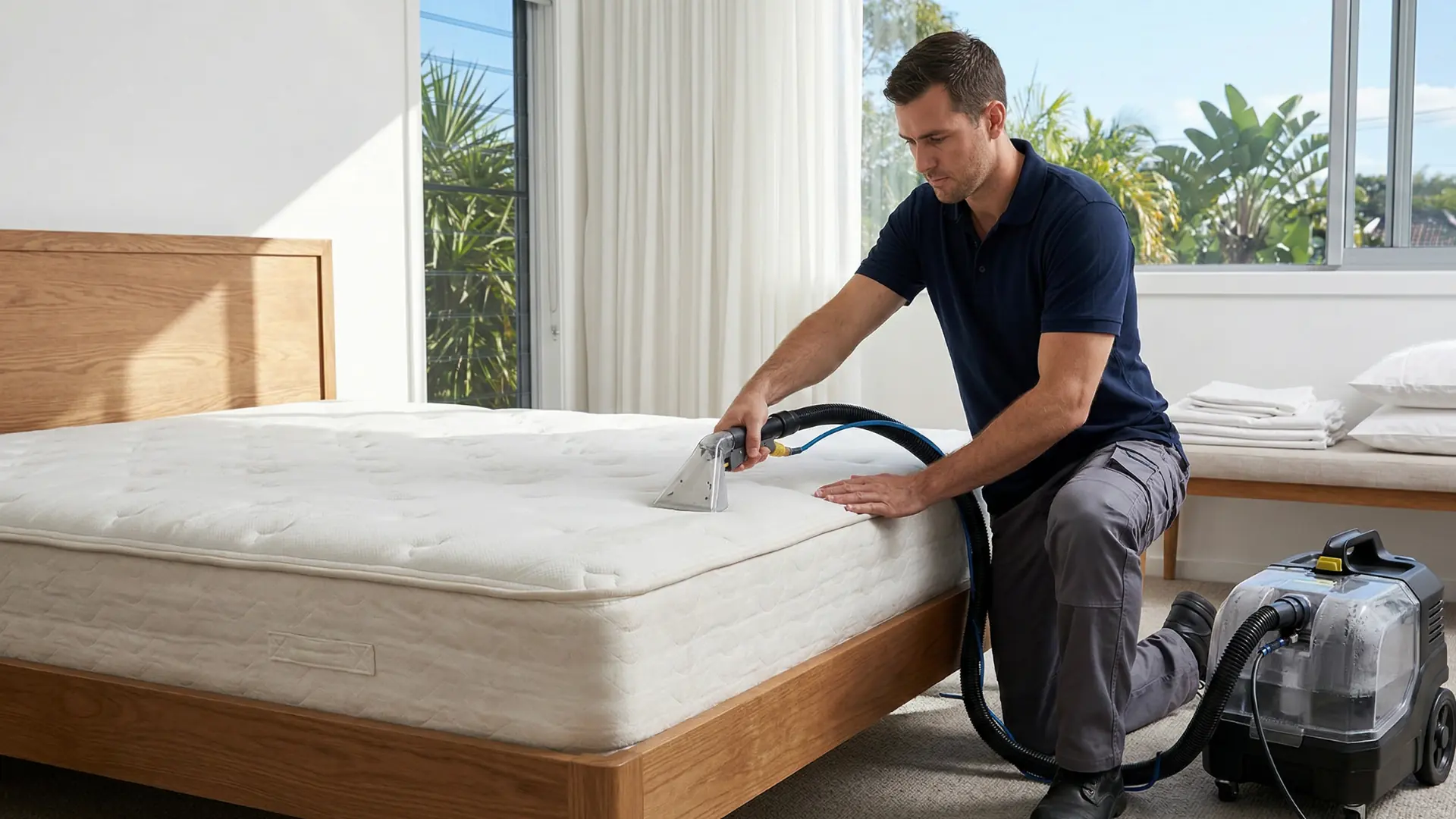
The technician inspects the cover fabric, seams, stains and construction before choosing a method. Dry soil is removed first. Suitable pre-treatment may then be applied to soiled areas, followed by controlled extraction. Biological marks and odours can need separate treatment, and complete visual removal is not always possible.
Moisture must be limited because a mattress contains thick absorbent layers. Good recovery and airflow are essential. The mattress should remain uncovered until the main panels, seams and edges are dry—not only the surface you can feel with a flat hand.
If you suspect bed bugs, it is worth knowing that cleaning is not a pest treatment. Pest control should be arranged first, and cleaning can follow once that has been resolved.
A practical bedroom routine
Start with regular laundering of sheets and washable protectors according to their care labels. Vacuum around the bed frame, skirting boards and under the bed, where dust can accumulate unnoticed. Managing bedroom humidity and ventilation also matters.
Use a mattress protector that can be removed and laundered. A protector does not eliminate the need for cleaning, but it provides a washable barrier for body oils, skin debris and minor spills. Replace or clean pillows according to their manufacturer's guidance.
Between professional visits, an upholstery attachment on the vacuum is a useful maintenance step on the mattress surface. Blot spills promptly rather than scrubbing, since scrubbing spreads the affected area and drives moisture deeper. Rotating the mattress in line with the manufacturer's guidance helps distribute wear.
These habits slow accumulation and manage the surface. They do not replace a deeper clean once stains, odours or heavier household use are involved. The mattress cleaning service page explains how that deeper clean is approached.
Setting sensible expectations
Cleaning can reduce dust, skin debris and other material available at the surface. It does not sterilise the mattress, permanently eliminate dust mites or treat asthma, eczema or allergic rhinitis. Claims of a complete or permanent cure should be treated cautiously.
If symptoms are significant, consult a qualified health professional. They can advise on diagnosis and appropriate environmental controls. Professional cleaning may support that plan, but it should not be presented as medical treatment.