If you have noticed dark spotting on your curtains, a damp smell near the windows, or a room that never seems to feel truly fresh, mould may be part of the problem. Curtains can quietly trap moisture, dust, and airborne particles for long periods, especially in humid coastal homes. In this guide, we explain what mould on curtains really means, why DIY cleaning is not always the safest choice, how professional curtain cleaning works, and what you can realistically expect in terms of results, drying time, and aftercare. If you want clear answers before deciding what to do next, this article is worth reading from start to finish.
Table of Contents
- Why Mould Grows on Curtains
- Why Mouldy Curtains Should Not Be Ignored
- DIY Cleaning vs Professional Cleaning
- How Professional Curtain Cleaning Removes Mould, Odours and Allergens Safely
- Which Curtain Types Need Extra Care
- How Long Curtains Take to Dry
- When Cleaning Is Enough and When Replacement May Be Better
- How to Help Prevent Mould from Returning
- Conclusion

Why Mould Grows on Curtains
Mould on curtains is more common than many people realise. Curtains sit close to windows, where condensation, temperature changes, and limited airflow often create the perfect conditions for moisture to linger. In Gold Coast homes, humidity can make that problem worse, especially in bedrooms, living rooms, and any space that stays closed for long periods.
Unlike hard surfaces, curtain fabrics can absorb and hold moisture. They also collect dust, fine debris, and airborne particles over time. When those particles combine with damp conditions, the fabric can start to develop musty odours, discolouration, and visible mould spots. In many cases, people only notice the issue once the smell becomes obvious or the staining has spread further than expected.
This is one reason regular curtain care matters. Curtains are not only decorative; they are functional fabric surfaces that affect how a room looks, smells, and feels day to day.
Why Mouldy Curtains Should Not Be Ignored
Some homeowners assume mould on curtains is a cosmetic problem only, but it can have a wider impact on indoor comfort. Curtains can hold unpleasant odours, trap dust, and continue to release stale smells back into the room even after windows are opened. If the fabric is heavily affected, the room may still feel damp or unclean no matter how tidy everything else looks.
There is also the issue of fabric damage. The longer mould, moisture, and residue remain in curtain fibres, the harder it can be to clean them properly without affecting the material. Delicate sheers, lined curtains, blackout curtains, and heavier drapes can all respond differently to moisture and cleaning methods. Leaving the problem for too long can mean more staining, more odour retention, and a higher chance that cleaning becomes more complex than it would have been earlier.
If your curtains smell musty, show spotting near the bottom, or seem to trigger that “stale room” feeling, it is usually worth having them assessed sooner rather than later.
DIY Cleaning vs Professional Cleaning
It is understandable to want to solve the issue quickly with supermarket sprays, vinegar solutions, or a basic wipe-down. The problem is that curtains are not all made to handle the same products, moisture levels, or cleaning techniques. What works on one washable synthetic curtain may damage another fabric completely.
DIY cleaning often creates three common problems. First, the mould may be treated only at surface level, while the deeper odour and contamination remain in the fabric. Second, over-wetting the curtain can make drying slower, which may actually worsen the issue. Third, scrubbing or using the wrong chemical can affect the colour, texture, shape, or lining of the curtain.
That does not mean every curtain must be professionally cleaned every time it gets dusty. But when mould, odours, or allergy-related concerns are involved, a professional approach is usually the safer option, particularly for curtains that are heavy, delicate, lined, pleated, or difficult to remove and rehang correctly.
How Professional Curtain Cleaning Removes Mould, Odours and Allergens Safely
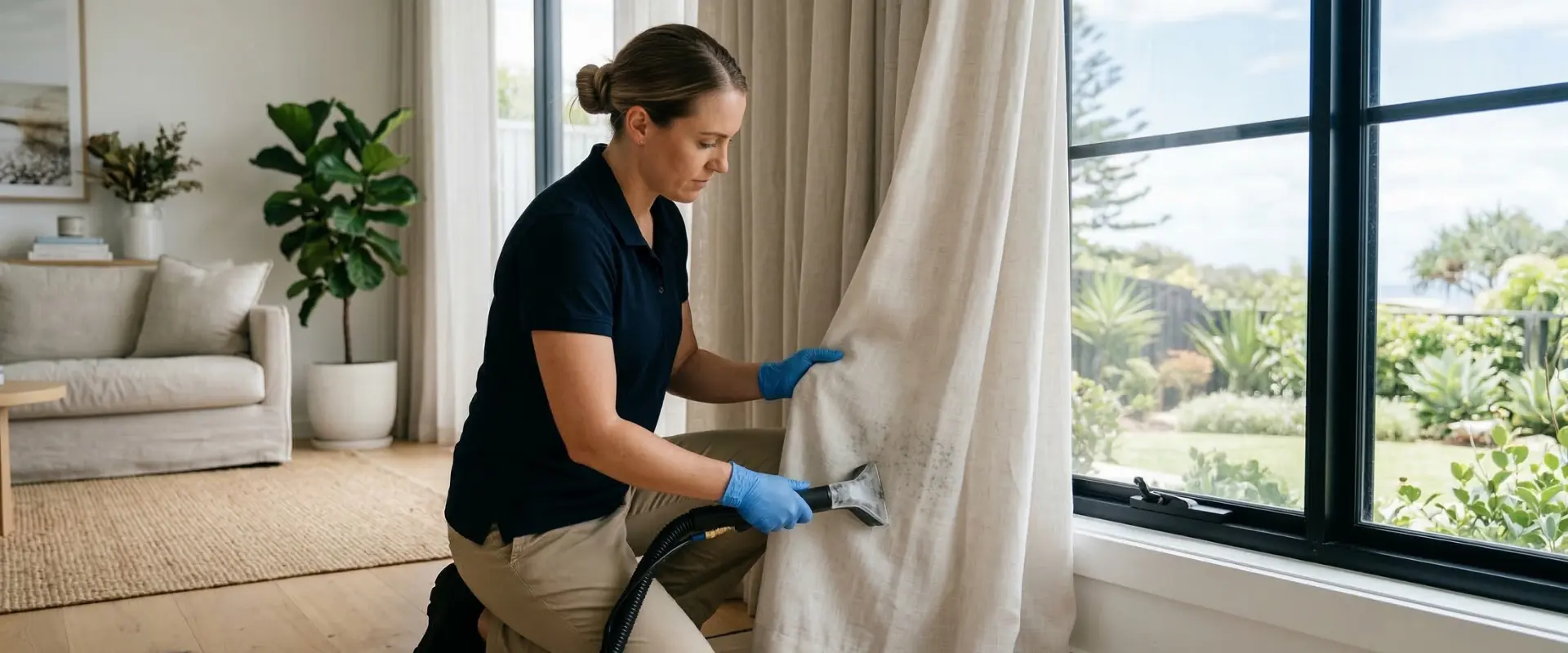
Professional curtain cleaning is not just about making fabric look better. It is about choosing the right method for the curtain type, the level of contamination, and the result the client is hoping to achieve. A proper service starts with inspection, because the safest cleaning plan depends on more than just the visible stain.
1. Fabric and condition assessment. The first step is understanding the material, its construction, and its condition. Some curtains can be cleaned on-site, while others are better handled off-site depending on their weight, lining, finish, or level of mould and odour. The goal is to protect the fabric while addressing the problem as thoroughly as possible.
2. Treatment matched to the curtain type. A professional cleaner looks at how to reduce mould-related contamination, lift trapped dust, and deal with musty odours without causing unnecessary stress to the fabric. This matters because curtains can shrink, lose shape, or respond poorly if the wrong process is used.
3. Controlled cleaning and moisture management. One of the major advantages of professional cleaning is control. Rather than soaking the curtain and hoping it dries well, the process is managed to reduce residue and avoid excessive moisture retention. That helps with both results and drying time.
4. Drying and final presentation. Clean curtains should not only smell fresher; they should also sit properly, look neat, and return to the room in a condition that feels genuinely revived. Depending on the service, this may also include careful handling for rehanging and presentation.
This is also where professional cleaning adds value beyond appearance. It helps address the combination of mould, dust, odours, and everyday allergens that often build up together. If you are unsure whether your curtains are suitable for professional treatment, it is a good idea to review the Curtains Cleaning service page or contact All Clean Revival for advice on the most appropriate next step.

Which Curtain Types Need Extra Care
Not all curtains can be treated the same way. Sheer curtains may look lightweight, but they can still be delicate and prone to damage if handled roughly. Blackout curtains often include layered construction, which means moisture and drying must be managed carefully. Heavier drapes may hold more dust and odour than expected, while lined curtains may react differently from the outer fabric.
Pleated styles, custom-fitted curtains, and curtains with hooks, tracks, or structured headings also require attention during removal, cleaning, and rehanging. In many homes, the challenge is not just the cleaning itself but preserving the curtain’s shape and finish so it still hangs properly afterwards.
This is why it helps to work with a team that treats curtain cleaning as a specialised fabric-care service, not as a one-size-fits-all job.
How Long Curtains Take to Dry
Drying time depends on the fabric, the cleaning method, the room conditions, and how much moisture the curtain retains. Lighter materials often dry faster than heavier drapes or lined blackout curtains. Airflow also matters. A well-ventilated room can support a smoother drying process, while closed, humid spaces may slow it down.
Clients often ask whether they will be without curtains for a long time. In practice, the answer varies by job. Some curtains can be returned to normal use relatively quickly, while others need more time for safe and even drying. What matters most is that drying is handled properly. Rushing the process can affect the finish of the curtain and, in some situations, make lingering moisture a problem.
If timing matters for your household, ask about expected drying time before booking. A good service should be able to explain what is realistic for your curtain type and room conditions.
When Cleaning Is Enough and When Replacement May Be Better
Professional cleaning can make a significant difference, but honest advice matters. If mould has been left untreated for a long time, if the fabric has deteriorated, or if staining is deeply set, there may be cases where replacement is the more sensible choice. That is not a failure of cleaning; it is simply the reality of fabric condition.
The benefit of professional assessment is that you get a clearer answer before investing time and money. In many situations, curtains can be refreshed successfully and returned to a much cleaner, fresher state. In others, it may be better to replace badly affected curtains and focus on preventing the issue from returning in the new set.
If you are weighing that decision, get in touch with All Clean Revival. A practical inspection can help you understand whether cleaning is likely to deliver the result you want.
How to Help Prevent Mould from Returning
Cleaning the curtains is important, but prevention matters too. If the source of moisture in the room is not addressed, the problem can return. Start with airflow: open windows when conditions allow, use exhaust fans where needed, and reduce long periods of trapped humidity indoors. If condensation builds up regularly near the windows, drying those areas and improving ventilation can make a real difference.
It also helps to keep curtains free of excessive dust. Even light maintenance, where appropriate for the fabric, can reduce build-up between professional cleans. Most importantly, do not wait too long once you notice a musty smell or visible spotting. Early action is usually easier on both the curtain and your budget.
For homes near the coast or rooms that tend to stay damp, periodic professional curtain cleaning can be a smart part of general home maintenance. It supports a fresher indoor environment and helps your curtains look better for longer.

Conclusion
Mould on curtains is not something most people plan for, but it is a problem worth taking seriously. It can affect how a room smells, how clean it feels, and how well your curtains hold up over time. The good news is that, in many cases, professional curtain cleaning can safely address mould-related contamination, reduce stale odours, and remove the dust and allergens that collect in the fabric.
If you have been wondering whether your curtains can be saved, whether they are safe to clean, or how long the process might take, the best next step is to ask. You can learn more on the Curtains Cleaning page or contact All Clean Revival for tailored advice. A professional assessment can help you decide with confidence and get your curtains back to looking, feeling, and smelling the way they should.