If you are comparing curtain cleaning services in the Gold Coast, it helps to know more than just the price. Homeowners usually want to know what the process actually involves, whether curtains need to come down, how long they take to dry, and whether delicate fabrics, linings, or blockout curtains can be cleaned safely. This guide walks you through what usually affects the cost, how professional curtain cleaning works, and what you can realistically expect before, during, and after the appointment. By the end, you should feel much more confident about choosing the right service for your home.
Table of Contents
- How much does curtain cleaning cost in Gold Coast?
- What affects the price?
- How the curtain cleaning process usually works
- On-site vs off-site curtain cleaning
- How long do curtains take to dry?
- What to expect on the day of service
- Can all curtains be cleaned?
- How often should curtains be cleaned?
- Conclusion

How much does curtain cleaning cost in Gold Coast?
There is no single flat rate that applies to every home, because curtain cleaning is one of those services where the details matter. As a general guide, pricing usually depends on the size of the curtains, the type of fabric, whether they are lined or blockout, how heavily soiled they are, and whether the work is completed on-site or taken away for more specialised treatment.
In practical terms, many customers are not simply paying for “washing curtains.” They are paying for fabric assessment, the right cleaning method, careful handling, stain treatment where appropriate, drying management, and in some cases removal and rehanging. That is why one set of light sheers in a bedroom may cost far less than heavy blockout curtains in a living room that have been collecting dust, odours, and moisture for years.
If you are trying to budget, the best approach is to treat any online number as a starting point only. A trustworthy quote should reflect your actual curtains rather than a generic promise. At All Clean Revival, a faster and more accurate estimate usually starts with a few clear photos and basic information about the room, curtain style, and approximate size. If you want a tailored quote for your home, you can contact All Clean Revival here or visit the Curtains Cleaning service page for more information.
What affects the price?
The biggest reason curtain cleaning quotes vary is that curtains are not all built the same. A cleaner first needs to understand what they are working with. Fabric type matters because delicate materials often require gentler techniques and more careful drying. Heavier curtains can take more time to handle and may need a different process altogether. Linings, thermal backing, and blockout coatings can also influence both the cleaning method and the level of risk involved.
Soiling level is another major factor. Curtains that mainly carry dust and light household buildup are very different from curtains exposed to grease, cooking odours, smoke, pet hair, mould-prone humidity, or years of neglect. Stain removal can also affect price, especially if treatment needs to be more targeted and there is no guarantee that every mark will disappear completely.
Then there is access and logistics. Some curtains can be cleaned in place, which is often more convenient and may reduce disruption in the home. Others may need to be removed and handled off-site, especially if a more controlled process is the safer option. If take-down and rehanging are part of the job, that may also be reflected in the quote.
This is why the cheapest number is not always the best value. A good service should explain what is included, what method is recommended, and whether there are any limitations based on the age, fabric, or condition of the curtains.
How the curtain cleaning process usually works
Professional curtain cleaning should feel organised and predictable, not vague. In most cases, the process begins with an inspection. The technician checks the fabric type, the general condition of the curtains, visible stains, dust buildup, odours, and any signs that the material may be fragile. This first step is important because it helps determine the safest and most effective cleaning method.
After that, the curtains may receive a pre-treatment in areas where soil has built up more heavily. This could include lower edges, hand-contact zones, or visible staining. The goal is not to overwork the fabric, but to loosen soil and improve the overall result in a controlled way.
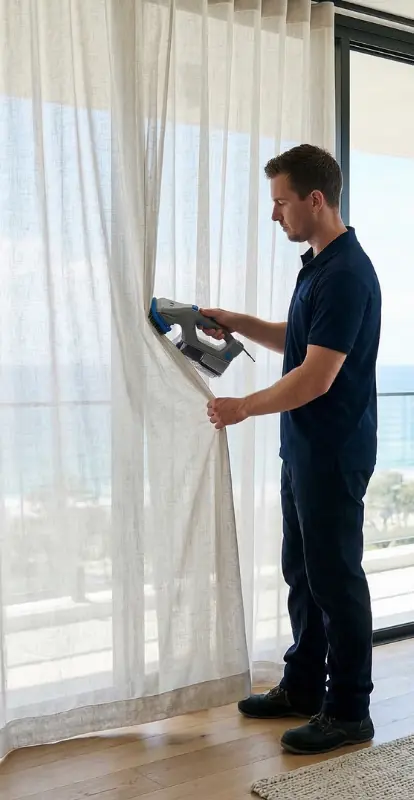
The main cleaning stage comes next. Depending on the curtain and the agreed method, this may happen while the curtains remain hanging or after they have been removed. A professional approach aims to clean thoroughly while respecting the material, minimising unnecessary moisture, and avoiding harsh treatment that could affect the drape, coating, or structure of the curtain.
Once cleaned, the curtains need time to dry properly. In some cases, light steaming or finishing may also be used to help them sit well again. The final step is a quality check, along with practical aftercare advice so you know how long to leave windows open, when the curtains can be fully closed again, and how to keep them fresher for longer.
On-site vs off-site curtain cleaning
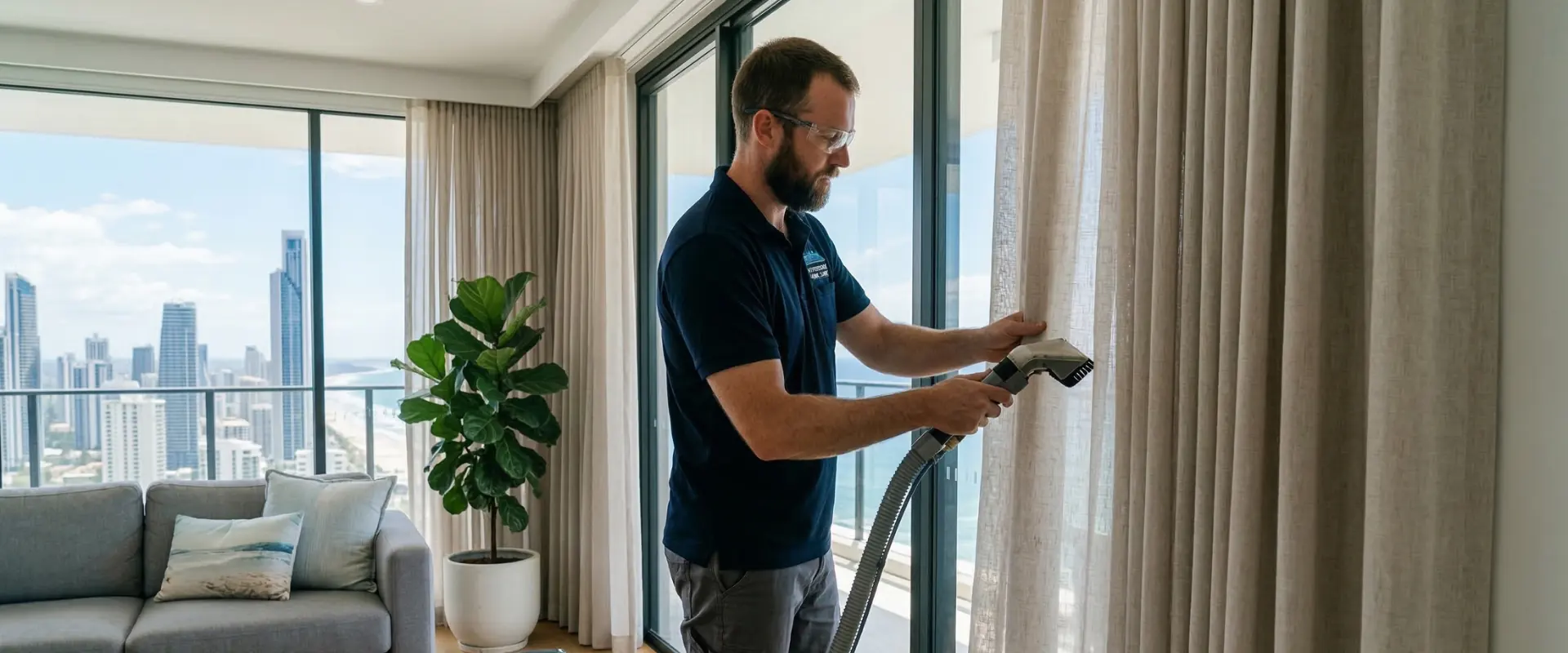
One of the most common questions customers ask is whether curtains need to be taken down. The answer depends on the curtain type and what the fabric needs. On-site cleaning is often appealing because it is convenient and can reduce disruption. It may be a good option when curtains can be safely cleaned where they hang and when the objective is to remove dust, refresh the fabric, and improve overall appearance without unnecessary handling.
Off-site cleaning can be a better fit when the curtains need more controlled treatment, more drying time, or a process that is safer outside the home environment. This may be recommended for certain heavy, lined, or sensitive curtains. While it can take longer overall, it may also allow for more detailed attention depending on the condition of the material.
Neither option is automatically “better” in every case. The right decision depends on the fabric, the condition, and the outcome you want. A professional company should explain the reasoning clearly instead of pushing a one-size-fits-all method. That kind of transparency builds trust and helps you make an informed decision.
If you are unsure which approach is best for your curtains, the simplest next step is to send an enquiry through the contact page and include a couple of photos. That usually makes it much easier to recommend the right service from the start.
How long do curtains take to dry?
Drying time is one of the biggest practical concerns for homeowners, especially when curtains provide privacy, help regulate sunlight, or are installed in bedrooms and living areas used every day. The honest answer is that drying time varies. Lighter fabrics can dry relatively quickly, while heavier curtains, dense linings, and blockout materials may take longer.
Ventilation also matters. A room with good airflow and mild weather usually supports faster drying than a closed room with limited air movement. The amount of moisture used during the cleaning process also makes a difference. A fabric-safe, controlled method is not only gentler on the curtain itself, but can also help reduce drying time compared with overly wet cleaning approaches.
What matters most is setting realistic expectations. Curtains may look fresh shortly after cleaning, but that does not always mean they are fully dry through every layer. A good technician should tell you when it is safe to close them fully, whether windows should be opened for airflow, and whether a heavier fabric may still need additional time.
For households planning around work, visitors, or routine family life, it is a good idea to mention any timing concerns in advance. That way, the cleaning plan can be organised with convenience in mind.
What to expect on the day of service
If you have never booked professional curtain cleaning before, it helps to know what the visit usually feels like. In most homes, the appointment begins with a quick review of the curtains that are being cleaned. The technician may confirm the fabric condition, point out any areas of heavier soiling, and explain the method that will be used.
From there, the work area is prepared to keep the service tidy and efficient. If the curtains are being cleaned in place, the focus is usually on controlled treatment and careful handling. If removal is required, that should be discussed clearly beforehand so you understand timing, next steps, and whether rehanging is part of the service.
You should also expect honest communication. Professional cleaning can make a major difference to dust, odours, and overall freshness, but not every stain, age mark, or sun-related change can always be reversed. The best experience usually comes from clear expectations rather than unrealistic promises.
Once the cleaning is done, you should receive simple guidance for aftercare. That may include keeping airflow in the room, avoiding immediate heavy handling, and staying aware that some heavier curtains may continue drying beyond the initial appointment window. If you want a service that values communication as much as results, you can learn more about All Clean Revival’s curtain cleaning service.
Can all curtains be cleaned?
Most curtains can be cleaned professionally, but that does not mean every curtain should be treated in exactly the same way. Age, sun exposure, fragile stitching, older linings, and delicate finishes can all affect the safest method. Some curtains may clean beautifully. Others may need a more cautious approach because the material has become brittle over time or because the backing has started to deteriorate.
This is one of the reasons inspections matter so much. A responsible cleaner looks beyond the surface and considers how the curtain is likely to respond. In some cases, the advice may be to proceed carefully with managed expectations. In others, the safest recommendation may involve a different process than the customer originally had in mind.
That kind of honesty is a good sign. Professional care is not about forcing a service onto every fabric. It is about choosing the method that gives the best balance between improvement, safety, and practicality.
How often should curtains be cleaned?
Curtains are easy to overlook because they are part of the room rather than something we touch every day like carpets or sofas. But they quietly collect dust, airborne particles, cooking residue, moisture, and odours over time. In busy homes, homes with pets, or spaces exposed to traffic pollution, they may need attention sooner than people expect.
As a general rule, many households benefit from professional curtain cleaning every 12 to 24 months, though some environments call for a shorter cycle. Kitchens, homes with pets, homes with smokers, and rooms affected by humidity or allergies often need more frequent care. Between professional visits, light vacuuming with the correct attachment and good ventilation can help reduce buildup.
Regular cleaning is not just about appearance. Fresh curtains can support a cleaner-feeling space, reduce settled dust in the home, and help window furnishings last longer by preventing deep buildup from becoming harder to remove.

What to expect from curtain cleaning in Gold Coast
When you understand how curtain cleaning works, the process becomes much less uncertain. Cost depends on real variables such as size, fabric, lining, condition, and the most suitable method. Drying time depends on fabric weight, airflow, and how the curtains are cleaned. And the overall experience should include more than just the cleaning itself: it should also include inspection, honest advice, careful handling, and clear communication.
For Gold Coast homeowners, the best results usually come from choosing a service that treats your curtains as part of your home, not just another item on a checklist. If you would like tailored advice, a clear quote, or help deciding between on-site and off-site care, contact All Clean Revival. You can also visit the Curtains Cleaning page to explore the service in more detail and take the next step when you are ready.